


Why Graduates Are Rethinking the Job First Approach?
How a Hotel Management Course Builds an Entrepreneur’s Toolkit?
Operations and Service Design
Finance, People and Customer Insight
Business Ideas Beyond Opening a Hotel
| Venture Type | Startup Need | Course Skill That Helps Most | Risk Level |
| Cloud kitchen | Small kitchen, delivery tie ups | Menu costing, hygiene control | Low to medium |
| Café or bakery | Rented space, equipment | Food production, guest service | Medium |
| Homestay or boutique stay | Spare rooms or a small property | Housekeeping, front office | Medium |
| Event and catering company | Vendor network, small team | Banquet operations, planning | Low to medium |
| Experience and travel planning | Laptop, local partners | Guest relations, itinerary design | Low |
| Hospitality consulting | Experience and credibility | Operations audits, training | Low |
Notice the pattern. The lowest risk ventures sell a skill or a service before they buy property. A graduate with a few years of kitchen or banquet experience can start a catering brand from a rented commissary kitchen.
Someone with strong guest instincts can design local trail experiences for domestic travellers. Which hospitality business is best to start after graduation? Your savings, your city, and your strongest skill will determine the truthful response. Pick the idea where your training gives you an unfair advantage, then test it small.
What the 2026 Numbers Say About Hospitality Demand?
Founders need demand before they need passion. Fortunately, the figures look strong. India’s travel and tourism industry supported 46.2 million jobs and produced $263.6 billion in 2025, according to industry data published in July 2026. The sector grew 7.3% that year, well above the global average of 4.1%. Forecasts point to 8.5% growth in 2026, which would lift its contribution to $286.1 billion and employment to 48.1 million. The same research projects a $527 billion sector by 2036, with 15.4 million additional jobs over the decade.
Domestic travellers drive most of this growth. Domestic spending reached about $203 billion, close to 86% of total tourism spending. A local founder who serves Indian families, couples and corporate groups taps the largest pool of tourism and hospitality money.
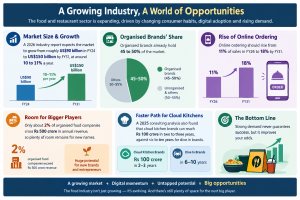
How big is India’s food service market? A 2026 industry report expects it to grow from roughly US$90 billion in FY24 to US$150 billion by FY31, at around 10 to 11% a year. Organised brands already hold 45 to 50% of the market. Online ordering should rise from 11% of sales in FY26 to 18% by FY31. Only about 2% of organised food companies cross Rs 500 crore in annual revenue, so plenty of room remains for new names. A 2025 consulting analysis also found that cloud kitchen brands can reach Rs 100 crore in two to three years, against six to ten years for dine in brands. Strong demand never guarantees success, but it improves your odds.
How to Manage Risk Before You Launch?
Passion fuels a launch. Planning keeps it alive. Smart graduates reduce risk in three practical ways before they spend serious money.
• Work first, then build. Spend two or three years in a respected property. You earn income, learn systems and build supplier and guest contacts.
• Run a side venture. Start weekend catering, a pop up stall or a small experience tour while you hold a job. You test demand without quitting.
• Launch lean. Rent kitchen space, lease before you buy, and hire part time staff until revenue steadies.
How much money do you need to start a hospitality business? No single figure fits every idea. A delivery only kitchen needs far less than a ten room guest house. Build a simple budget that covers rent, licences, equipment, raw materials and at least three months of running costs. Add a buffer for slow weeks, because every new venture has them.
Compliance deserves early attention too. Food safety registration, trade licences and tax registration protect you and build guest trust. Treat them as part of your brand, not as paperwork. Founders who respect rules sleep better and scale faster.
Why Studying a Hotel Management Course in Kolkata Suits Future Founders?
City choice shapes your education. A hotel management course in Kolkata places you in one of India’s richest food cultures. The city lives on street snacks, sweets, fish, festival feasts and a busy calendar of cultural events. Founders learn quickly here, because customers notice quality and talk about it loudly.
Look for programmes that go beyond classroom theory. Industrial training, internships, grooming sessions and live event projects turn knowledge into habit. A dedicated entrepreneurship centre adds another layer, because it gives students mentoring and a safe place to test ideas before real money enters the picture.
Which hotel management course is best for starting your own business? Bachelor, diploma and master level options all work, so match the level to your goals. A bachelor programme gives broad operational grounding. A culinary focused route suits future restaurateurs. A master level programme helps those who want strategy, finance and leadership depth. Compare curriculum, training partners, faculty experience and startup support before you apply.
Conclusion
Hospitality entrepreneurship is no longer a fringe dream. It is a practical, well supported alternative for graduates who want more control over their careers. A good hotel management course gives you operations knowledge, financial awareness, people skills and a guest first mindset. Those strengths apply to cafés, cloud kitchens, homestays, events, travel experiences and consulting.
The market backs the idea. Tourism continues to outgrow the wider economy, domestic travel drives most spending, and the food service sector keeps moving toward organised, digital and delivery led models. Opportunity is real, yet success still demands planning. Start lean, learn from a job or a side project, respect compliance and watch your numbers every week.
You do not need to choose between security and ambition on day one. Many graduates build experience first and launch later. Others begin small while employed. The right path is the one that fits your savings, your temperament and your goals. Choose your education carefully, use every practical lab, and treat every internship as market research for your future business.
Turn Your Hospitality Training into a Business?
Your first step is choosing a learning environment that respects both careers and startups. Indian Institute of Hotel Management in Kolkata offers bachelor, diploma and master level programmes in hotel management, hospitality management and culinary management. Its website also highlights a Centre of Excellence for Entrepreneurship and Start ups, which gives aspiring founders a direct link between classroom learning and business building.
Students also get national and international internship opportunities, industrial training, grooming sessions and global exposure programmes. The institute runs two campuses in Salt Lake, Kolkata, and lists scholarships of up to 50% along with education loan support. Admissions for 2026 are open, so you can plan your journey now.
Do not wait for the perfect moment. Visit the website at https://indianihm.com, explore the programmes, and compare them with your career goals. Call +91 90514 75838 to speak with the admissions team, ask about the entrepreneurship centre, and learn how the training can support your own café, kitchen, stay or events brand. Your future business could begin with one conversation. Make that call today and start building the hospitality career you actually want.
