Let’s be honest. Most students in India dream of a career in the hospitality industry. The glamour of five-star hotels, the thrill of event management, the charm of travel and tourism all sound incredible. But the moment they look at the fee structure of some hospitality institutes, that dream quietly fades.
Expensive tuition fees, heavy student loans, and financial pressure stop thousands of talented young people from even trying. That is a real problem. And it is happening every single day across India.
If you have been looking for a way to build a solid hospitality career without burning through your family’s savings, this article is going to give you everything you need to know. Keep reading.
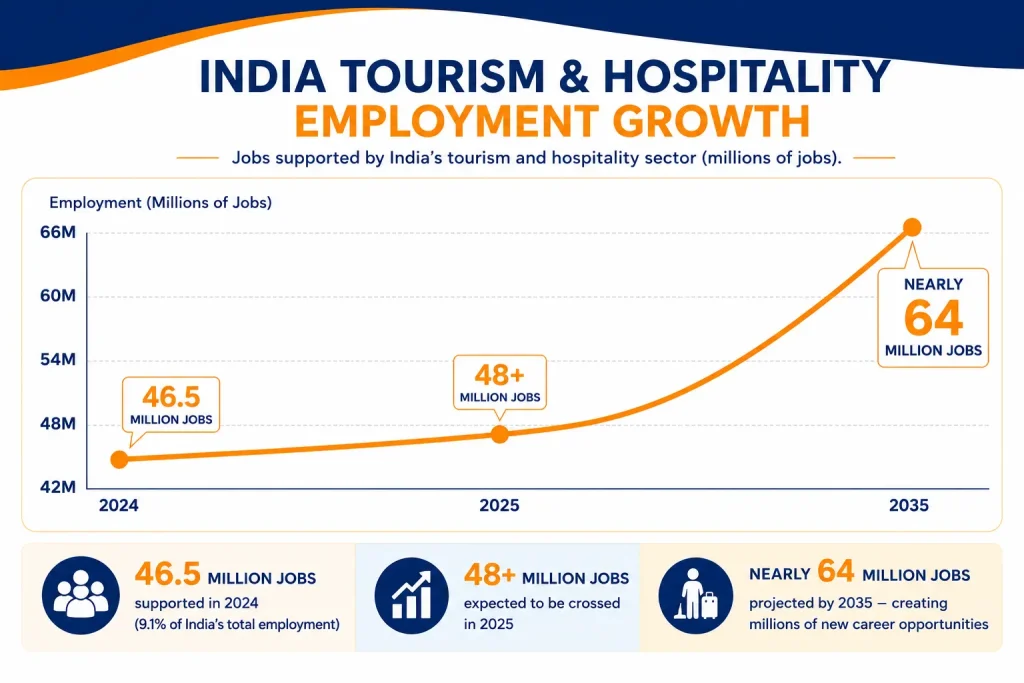
India’s hospitality and tourism sector is not just growing. It is booming. Tourism supported 46.5 million jobs in 2024, accounting for 9.1% of India’s total employment, and is expected to cross 48 million in 2025 and nearly 64 million by 2035. Those are not just numbers. Those are real career openings that need real skilled professionals to fill them.
Why Practical Training Matters More Than Expensive Education
Here is something every hospitality employer will tell you: they do not hire degrees, they hire people. And what makes a hospitality professional genuinely valuable is not the fee receipt from their institute. It is how confidently they handle a difficult guest, how efficiently they manage front office operations, how calmly they coordinate a large event, and how precisely they apply food and beverage standards.
What skills do hotel management employers prioritize in fresh graduates?
Communication, teamwork, customer service expertise, problem-solving under pressure, and operational competence. These are all skills that are built through hands-on practice, not through expensive classroom theory. A well-designed practical hotel management training program, regardless of its cost, can produce graduates who are industry-ready from day one.
India’s hospitality sector experiences a 40 to 45 percent annual turnover rate in entry-level and mid-level positions, compared to 15 to 20 percent in other sectors. This is partly because graduates lack practical readiness. Affordable institutions that prioritize experiential learning, live hotel simulations, kitchen training, and industry internships often produce more grounded and resilient hospitality professionals than institutions focused purely on academic prestige.
A low-cost hotel management course in Kolkata that emphasizes practical exposure gives students a genuine career advantage that no expensive brochure can replicate.
Can a Low-Cost Hotel Management Course in Kolkata Lead to High-Growth Career Opportunities?
This is the question most students and parents wrestle with. The concern is understandable. People naturally associate cost with quality. But in the world of hospitality education, this correlation is far weaker than most assume.
Does the cost of a hotel management course affect career growth in India? Not in any significant way. Career growth in hospitality depends on the professional’s skill set, attitude, work ethic, and ability to consistently deliver exceptional guest experiences. The market size of the hospitality industry in India is projected to grow from approximately US$24.61 billion in 2024 to US$31.01 billion by 2029, at a CAGR of 4.73%. That kind of expansion creates consistent upward mobility for skilled professionals at every level.
Students who complete a budget-friendly
hotel management degree from a quality institution in Kolkata have gone on to work with leading hotel chains, international cruise lines, airline companies, and global hospitality brands.
The industry rewards competence. An affordable hotel management certification backed by solid practical training and the right professional attitude can absolutely lead to high-growth, long-term career outcomes across India and abroad.
What Should Students Look for Beyond Affordability When Choosing a Hospitality Institute?
Affordability is a great starting point. But it should never be the only factor in your decision. Choosing a hotel management institute in Kolkata wisely means looking at the complete picture.
What are the key factors to evaluate when choosing a hotel management college in Kolkata?
Start with curriculum relevance. Does the program cover contemporary hospitality operations, revenue management, customer experience design, and food science? Next, assess faculty expertise. Professors with real industry experience bring irreplaceable value to the classroom. Look at industry partnerships, internship networks, and the strength of the placement support system.
A strong hospitality placement assistance record is a reliable indicator of an institution’s quality. Beyond that, evaluate the practical training infrastructure. Does the institution have training kitchens, mock front office setups, housekeeping labs, and access to live hotel environments?
An institution that combines low-cost hotel management education with strong practical infrastructure, industry-connected faculty, and genuine placement commitment delivers far more value than any expensive institute with only theoretical depth.
How Kolkata Has Become an Attractive Destination for Hospitality Education
Kolkata is not just Bengal’s cultural capital. It is rapidly growing into one of India’s most compelling destinations for hospitality management education. The city has a rich and vibrant food culture, a strong tourism ecosystem, a growing hotel development pipeline, and a hospitality industry that generates steady employment opportunities for fresh graduates.
Kolkata has a thriving hospitality industry with numerous hotels, restaurants, and tourism businesses, offering students ample opportunities for internships, practical training, and job placements. The city’s lower cost of living compared to Mumbai and Delhi makes it inherently more affordable for students relocating from other parts of India. There are over 80 hotel management colleges in Kolkata, offering students a wide range of educational options across different price points.
Why is Kolkata a good city to study hotel management in India? Because it combines affordability, industry access, cultural richness, and educational diversity in a way that very few Indian cities can match. Students get to learn hospitality in a city that lives and breathes food, festivals, and cultural tourism every single day.
That immersive environment, combined with a low-cost hotel management course in Kolkata, creates a powerful educational experience that prepares students for real-world hospitality roles across India.
The Role of Industry Exposure in Expanding Career Accessibility
Without discussing internships, a blog about hospitality education would be incomplete. And for good reason. In the hospitality industry, your internship can genuinely be your first big career break.
How important are internships in hotel management courses for career success?
Extremely important. Internships build confidence, develop professional networks, and expose students to real operational environments that no classroom can simulate. Students who complete strong internships understand guest service dynamics, team collaboration, and departmental workflows at a level that makes them immediately valuable to employers.
Affordable institutions that build genuine industry partnerships and arrange structured hotel management internship programs for their students are making career access significantly more equitable. Students from smaller towns and lower-income backgrounds who would never have had access to five-star hotel training environments are now stepping onto those floors, building skills, and launching careers.
That is what inclusive hospitality education genuinely looks like in practice.
How Affordable Hospitality Education Supports Long-Term Return on Investment
Let us talk money. Not in a gloomy way, but in a very practical and empowering way. Every student making an educational decision is also making a financial investment. The question is: how quickly and how significantly will that investment pay off?
Is hotel management a good return on investment for students in India? The data strongly suggests yes. The hospitality sector is projecting a salary increment of 9.2 percent, driven by rising disposable incomes, better regional connectivity, and growing travel demand. Entry-level roles in hotels, restaurants, and tourism companies come with steady growth trajectories, and managerial positions in premium properties offer genuinely competitive compensation packages.
A student who chooses a low-cost hotel management course in Kolkata over an expensive program in another city can enter the workforce with significantly lower debt pressure, an earlier career start, and a faster path to financial stability.
The educational return on investment in hospitality is maximized when a student chooses a program that delivers strong practical skills, solid industry placement support, and a recognized qualification. All comes at a cost that does not become a financial burden for years after graduation.
IndianIHM and the Future of Accessible Hospitality Education
Affordable, quality hospitality education needs institutions that genuinely believe in its mission. IndianIHM in Kolkata is one such institution. It has built its educational model around the understanding that professional hospitality training must be accessible to students from all economic backgrounds without compromising industry standards or career outcomes.
IndianIHM combines affordability with a curriculum that reflects real industry demands. The institution focuses on practical learning, industry-oriented training modules, experienced faculty, and a structured approach to preparing students for employment across India’s booming hospitality sector.
Students at
IndianIHM benefit from a learning environment designed to build operational competence, professional confidence, and the kind of real-world readiness that employers look for.
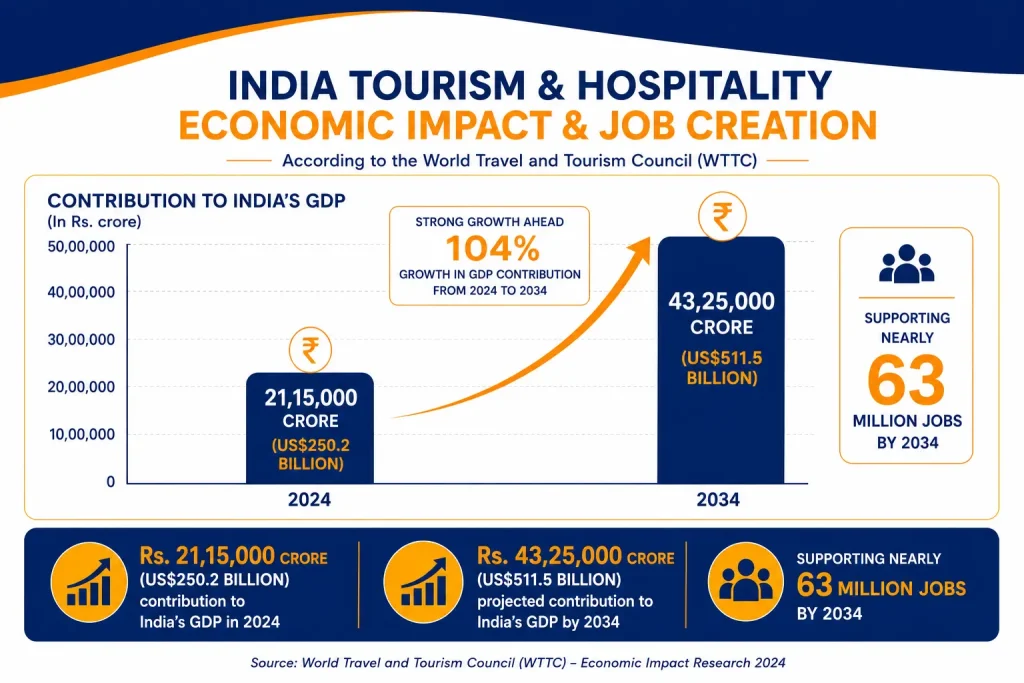
As India’s hospitality sector grows toward a projected US$523 billion GDP contribution by 2034, institutions like IndianIHM are ensuring that the next generation of hospitality professionals comes from every corner of India, regardless of economic background. That is the future of inclusive hospitality education.
Conclusion
India’s hospitality sector is growing faster than most industries in the country, and the demand for skilled professionals is only going to increase. The old barrier of expensive education is falling, and low-cost hotel management courses in Kolkata are at the forefront of this change. Affordable hospitality education is not a lesser option. It is a more sensible, affordable, and accessible route to a successful professional career.
Affordability does not mean reduced quality when the right institution prioritizes practical training, industry partnerships, and genuine career support. Students from every economic background now have a real opportunity to build competitive, rewarding careers in hotels, resorts, airlines, event management, and tourism.
The key is choosing an institution that values outcomes as much as you do. IndianIHM offers exactly that combination: accessible fees, industry-relevant education, strong practical training, and a genuine commitment to student career success. Your hospitality career does not have to start with a financial burden. It can start right here, in Kolkata, today.
Frequently Asked Questions
1. What is the duration of a low-cost hotel management course in Kolkata?
Most affordable hotel management programs in Kolkata range from one-year diploma courses to three-year degree programs, depending on the level of qualification a student chooses to pursue.
2. Can I find a job in a five-star hotel after completing an affordable hotel management course?
Yes. Hospitality employers prioritize practical skills, professional attitude, and industry training over tuition fees. Many graduates from affordable programs work with leading hotel brands across India.
3. Is Kolkata a good city for hotel management studies?
Absolutely. Kolkata has a rich hospitality ecosystem, a strong culinary culture, multiple internship opportunities, and over 80 hotel management colleges, making it one of India’s best cities for affordable hospitality education.
4. What subjects are covered in a hotel management course in Kolkata?
Standard programs cover front office operations, food and beverage management, housekeeping, culinary arts, revenue management, customer service, event management, and hospitality marketing.
5. Does IndianIHM provide placement assistance to students?
Yes. IndianIHM supports students through structured career development programs, industry interactions, internship placements, and placement assistance designed to help graduates enter the hospitality workforce with confidence.