Artificial intelligence has quietly rewired hospitality operations across almost every function. Guest engagement, revenue management, housekeeping coordination, and business forecasting now depend heavily on intelligent systems working behind the scenes. A 2026 global survey of hospitality technology decision-makers found that 71 percent of professionals believe AI is having a significant or transformative impact on the industry. Another 85 percent plan to allocate at least five percent of their IT budget specifically toward AI tools this year. These figures point to a structural shift, not a passing trend that fades by next season.
A degree in hotel management remains the essential starting point for any serious hospitality career. It builds operational fundamentals, front office knowledge, food and beverage expertise, and guest service instincts that no software can replicate on its own. But a strong academic foundation alone does not make someone a capable leader in 2026. Future hotel managers also need digital literacy, analytical thinking, and comfort to adapt to new technology as it arrives. IndianIHM’s industry-oriented learning ecosystem blends operational excellence with innovation and future-ready competencies, positioning graduates to lead AI-enabled hotels rather than simply work inside them. Technology fluency has become a core management skill, not a specialized talent reserved for IT departments alone.
This article breaks down exactly what future hotel managers need beyond their degree, using verified 2026 data throughout. Keep reading and you will leave with a practical roadmap to stay indispensable in a fast-changing industry.
Why the Role of a Hotel Manager Is Changing Faster Than Ever
Hotel managers once focused primarily on supervision. They checked schedules, resolved guest complaints, and kept daily operations running smoothly without much technical involvement. That role has expanded considerably over the past few years. Guest expectations have shifted, automation now handles routine tasks, and predictive systems inform decisions that used to rely purely on gut instinct and years of floor experience. Modern hotel managers combine hospitality expertise with strategic thinking and digital decision-making on a daily basis.
A recent hospitality technology report found that just over half of hoteliers, 51 percent, are already piloting or actively using AI across their operations. This shift demands managers who can interpret dashboards, understand forecasting models, and translate raw data into practical decisions on the floor. Institutions like IndianIHM are increasingly aligning hospitality education with these evolving industry expectations, producing graduates who can manage future-ready hospitality businesses from day one rather than learning everything on the job.
From Operational Managers to Digital Hospitality Leaders
These days, managing front desk employees, housekeeping crews, and kitchen operations is only one aspect of leadership in the hospitality industry. Today’s leaders need digital fluency, cross-departmental collaboration skills, and genuine comfort working with business intelligence tools that generate insights in real time.
How can hotel managers lead AI-supported teams without losing the human touch that guests expect? This question sits at the center of modern hospitality leadership conversations. The strongest answer treats AI as a tool that removes repetitive work, freeing staff to focus entirely on genuine guest connection and memorable moments. Managers who confidently oversee AI-supported teams while protecting personal warmth consistently outperform peers who treat technology as a threat rather than an ally. Leadership transformation has become one of the defining traits separating future hotel managers from purely operational supervisors of the past.
Why a Degree in Hotel Management Alone Is No Longer Enough
Employers increasingly look beyond academic transcripts when hiring hospitality graduates. They want candidates who demonstrate practical competencies, technological awareness, and genuine leadership potential from the very first interview. A degree in hotel management provides the academic backbone every hospitality professional needs, but career longevity depends on continuous skill development that extends well past graduation day.
IndianIHM’s practical learning model, built around internships and AI-focused initiatives, helps students remain competitive as the industry evolves around them. Programs that expose students to messy, real-world situations before their first job produce graduates who adapt faster once they enter actual hotel environments. This hands-on exposure often matters just as much as the degree certificate itself when employers make final hiring decisions between similarly qualified candidates.
The Expanding Skill Portfolio of Tomorrow’s Hotel Managers
The hospitality skill set has grown noticeably wider over the past several years. Communication still matters enormously, but it now sits alongside emotional intelligence, data interpretation, digital collaboration, and sharp operational problem-solving under real pressure.
Successful hotel managers increasingly distinguish themselves through multidisciplinary capability rather than operational knowledge alone. A manager who reads revenue analytics, interprets guest sentiment data, and still remembers a returning guest’s favourite room stands out immediately in a competitive job market. Continuous professional development through certifications and short technical courses has become a standard expectation rather than an optional bonus reserved for the most ambitious professionals.
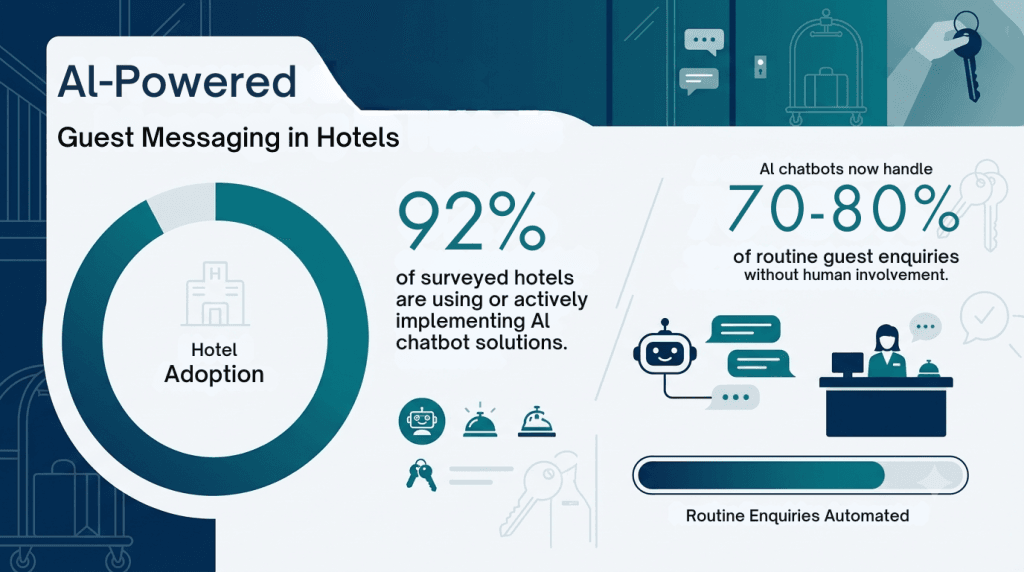
AI now touches nearly every corner of a hotel property. Front office check-ins, revenue pricing models, housekeeping schedules, food and beverage forecasting, guest personalization, and maintenance planning all rely on some form of intelligent system today. Recent data shows AI-powered guest messaging leads adoption rates, with 92 percent of surveyed hotels either using or actively implementing chatbot solutions. These systems now handle 70 to 80 percent of routine guest enquiries without any human involvement at all.

Which hotel departments are experiencing the biggest impact from
artificial intelligence right now? Revenue management and guest communication lead to the transformation, followed closely by housekeeping optimization and energy management systems. AI streamlines repetitive operational work, giving hospitality professionals more bandwidth to focus on personalized guest engagement and higher-level strategic planning instead of routine administrative tasks that once ate up entire shifts.
Human Hospitality and Artificial Intelligence Can Thrive Together
AI complements hospitality professionals rather than replacing them entirely. The real skill lies in balancing automation with empathy, cultural awareness, and authentic relationship building that software simply cannot replicate convincingly no matter how advanced it becomes.
While AI supports operational accuracy and speed, genuine guest experiences still depend on skilled professionals who can read unspoken cues and respond with real warmth. A 2025 study of independent hotels found that 74.5 percent of properties using AI reported positive results overall. The strongest performers consistently paired automation with well-trained human staff rather than treating technology as a complete replacement strategy for personalized service delivery.
Why Data Literacy Is Becoming a Core Hospitality Leadership Skill
Hotel managers now rely heavily on data-driven insights for revenue optimization, guest personalization, forecasting, and daily operational planning. Numbers reveal patterns that pure intuition often misses, particularly when predicting seasonal demand or anticipating cancellation trends before they actually happen.
Future hospitality leaders need to understand data interpretation just as thoroughly as they understand operational management fundamentals. Industry research shows AI-based predictive analytics can forecast demand with roughly 85 percent accuracy, helping hoteliers optimize staffing levels well ahead of actual need. Managers who read this data confidently make sharper business decisions while improving guest satisfaction inside increasingly AI-supported hospitality environments across every property type.
Innovation and Continuous Learning Will Define Long-Term Hospitality Success
Hospitality careers no longer reward standing still for very long. Rapid technological change forces professionals to continually upgrade their knowledge through certifications, workshops, and direct exposure to emerging tools that barely existed a couple of years earlier.
Adaptability and continuous learning have become genuine competitive advantages in this fast-moving industry. Managers who treat their degree as a finish line often find themselves outpaced by peers who kept building new skills quietly in the background. The gap between conventional operational managers and future hospitality leaders frequently comes down to this single habit of staying curious long after formal education officially ends.
What Skills Should Students Develop Alongside a Degree in Hotel Management for the AI Era?
This question comes up constantly among students planning their careers, and it deserves a direct answer rather than vague generalities. Students should build AI awareness, sharpen digital communication, develop leadership instincts early, and understand revenue analytics well enough to hold a confident conversation with a finance team.
Emotional intelligence remains completely irreplaceable, alongside customer experience management and a working understanding of sustainability practices that increasingly shape guest choices and brand reputation. Strategic thinking ties all of these pieces together into something employers actively seek during hiring. Combining a solid degree in hotel management with these digital competencies significantly boosts employability and helps graduates stand apart from candidates holding nearly identical qualifications on paper.
How Does IndianIHM Prepare Students as Future Hotel Managers for AI Powered Hospitality Careers?
IndianIHM integrates future-oriented learning directly into its degree in hotel management, rather than treating technology as a late addition tacked onto the final semester. The curriculum weaves practical training, AI-enabled hospitality awareness, and hands-on exposure into every stage of the program from the very beginning. Students complete structured internships at live hospitality properties, working directly with booking systems, guest management software, and revenue tools that shape actual hotel decisions.
Industry collaborations bring working professionals into the classroom regularly, so students hear firsthand how AI adoption is reshaping daily responsibilities on the ground floor. Personality development sessions build communication confidence and emotional composure that no software can teach on its own, while placement preparation ensures graduates walk into interviews already fluent in both service standards and current technology trends. This combination equips aspiring hospitality professionals with the operational expertise, technological understanding, and leadership capabilities required to succeed in AI-enabled hotels and global hospitality organizations.
Industry Exposure That Bridges Classroom Learning and Smart Hotel Operations
Internships, live industry projects, and technology-enabled simulations help
IndianIHM students understand AI-driven hotel environments long before they clock in for a real shift. This exposure matters more than most students realize until they stand in a lobby watching a check-in kiosk handle what once required five minutes of human conversation and paperwork.
IndianIHM’s practical learning environment lets students experience emerging hospitality technologies alongside traditional operational practices at the same time. This dual exposure builds both confidence and employability, since graduates arrive at their first job already comfortable with modern tools instead of learning them under pressure while guests wait impatiently at the counter.
The Future of Hotel Management Education Will Belong to Adaptive Leaders
Hospitality education continues evolving alongside AI, automation, sustainability demands, and increasingly digital guest experiences that change every year. Degree programs that refuse to update their approach, risk producing graduates who feel prepared for a version of hospitality that no longer exists in practice.
IndianIHM remains committed to preparing adaptable, innovative, and globally competent hospitality professionals capable of leading future organizations rather than merely participating in them. The hotels of tomorrow will be shaped by people who saw this shift coming early and built their skill sets accordingly, long before adapting became mandatory for basic career survival in the field.
In a Nutshell
A degree in hotel management remains the essential starting point for any hospitality career, and nothing in this article suggests otherwise. Future leadership, however, increasingly depends on technological fluency, hands-on experience, genuine innovation, continuous learning, and sharp strategic thinking layered on top of that academic foundation.
IndianIHM’s industry-integrated educational approach equips students with a balanced combination of academic knowledge, operational competence, AI awareness, and leadership capabilities required to excel inside an increasingly intelligent, digitally connected hospitality industry that shows no signs of slowing down any time soon.
Frequently Asked Questions
1. Does a degree in hotel management still matter in an AI-driven hospitality industry?
Yes, it remains the essential foundation of any hospitality career. Graduates now need additional skills like data literacy and technology fluency to stay competitive and lead effectively.
2. What technology skills should hospitality students learn today?
Students should learn AI awareness, revenue analytics, digital communication tools, and basic data interpretation. These skills complement traditional hospitality training and significantly improve long-term employability.
3. Will AI replace hotel managers in the future?
No, AI handles repetitive tasks like messaging and bookings, but human managers remain essential for leadership, emotional intelligence, and delivering the personalized service guests genuinely value most.
4. How can students gain practical AI exposure before graduating?
Internships, live industry projects, and technology-enabled simulations expose students to real hotel systems, helping them build confidence and competence before entering full-time hospitality management roles.
5. Why is continuous learning important for hotel managers?
Technology and guest expectations change constantly. Managers who keep learning through certifications and industry exposure stay relevant, while those who stop growing risk falling behind quickly.